The Supreme Court Strikes Back
The Trump administration's aggressive trade agenda hit a massive, $150 billion wall today. In a landmark ruling, the U.S. Supreme Court struck down the global tariffs imposed by the President, declaring his use of emergency powers to enact them illegal. The decision doesn't just halt a policy; it forces a massive, unintended fiscal injection into the economy. With up to $133 billion in refunds potentially owed, the Fed may be forced to print money to cover the gap—turning a trade policy setback into a "2026 fiscal stimmy."
The "So What" is the sudden re-emergence of the Judiciary as a hard check on Executive dominance. For months, the administration has operated on a "deference first" model, leveraging emergency statutes to reshape global trade overnight. The Court’s rejection of this "rule by emergency" suggests that the era of uncontested policy-by-decree is over. The ruling effectively mandates a massive, forced Quantitative Easing (QE), as the capital required for refunds will likely necessitate significant intervention from the Federal Reserve.
Politically, the fallout is already radioactive. The ruling was notably fragmented, with seven of the nine justices feeling the need to pen separate opinions—a sign of deep institutional tension. Most significantly, Trump appointees Gorsuch and Barrett sided with the liberal wing to strike down the tariffs, a move the President has already branded a "disgrace." This "betrayal" by his own appointees sets the stage for a "nuclear" executive response, with Trump already signaling he intends to "do something about the courts."
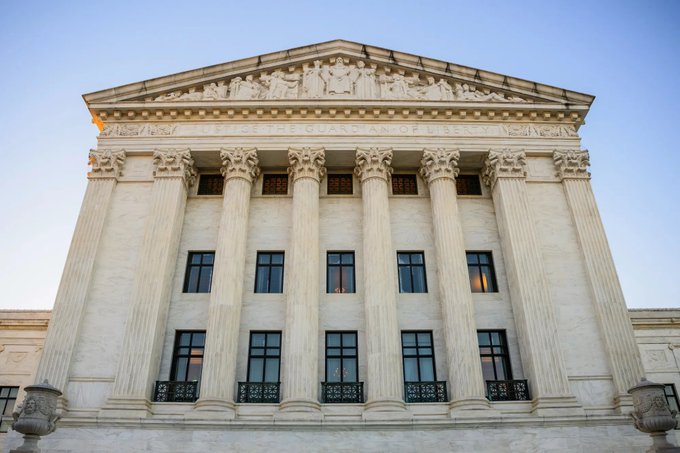
Despite the legal setback, the administration is already pivoting to a "backup plan." Using alternative frameworks like Section 232 (national security) or Section 301, the President announced a new 10% global tariff only hours after the ruling. This immediate escalation confirms that the trade war hasn't ended; it has simply evolved into a constitutional showdown. We are moving from a debate about trade economics to a battle over the fundamental limits of presidential authority.
"TRUMP PREPPING ONE RIGHT NOW YOU KNOW IT" — jbulltard (@jbulltard1)
The "Vibe Coding" Revolution
The era of the "App Store" is dying, and Andrej Karpathy is here to perform the autopsy. In a viral reflection on "vibe coding," Karpathy demonstrated how LLMs can now generate highly bespoke, ephemeral software in minutes—tools that would have previously taken hours or required a dedicated app. He argues that we are moving away from a long tail of discrete apps and toward a world where AI-native sensors and actuators are orchestrated into custom solutions on the fly.
This shift signals a fundamental change in how we interact with technology. Instead of searching for an app to solve a specific problem, we will simply state a goal and have an agent improvise the interface. Karpathy’s dashboard for his 8-week cardio experiment, coded in an hour, is the prototype for this future. The friction isn't in the coding anymore; it's in the lack of "agent-native ergonomics" in our physical hardware.

The "So What" for the industry is a total reconfiguration of the value chain. If apps are disposable, then the value shifts to the sensors that provide data and the actuators that perform actions. Companies still building walled gardens with human-only GUIs are the new dinosaurs. In the Karpathy vision, the winning products of 2026 will be those with the best AI-native CLIs, allowing agents to "vibe code" them into existence whenever the user has a whim.
The Tragic Wall of Bureaucracy
A heartbreaking story out of the Netherlands has become a grim symbol of the European housing crisis. An elderly couple in their 80s committed suicide together after being hit with a 30,000€ fine and an eviction notice for overstaying the legal limit in their holiday home. The couple, like many, were using the holiday park as a permanent residence due to the severe lack of affordable housing.
The tragedy highlights the lethal rigidity of modern bureaucratic systems. While the municipality enforced the six-month occupation limit to the letter of the law, the human cost was total. The story has sparked intense outrage online, particularly when contrasted with national policies that continue to allocate resources to housing for immigrants. It’s a stark example of a system that has lost the ability to distinguish between "legal" and "just."

"In the Netherlands, an old couple in their 80s committed suicide together to avoid an eviction from their holiday home... They had nowhere else to go and likely couldn't afford the fine. May they have a better afterlife than this hell." — Johannes M. Koenraadt (@johannesmkx)
The Rise of High-Status Reaction
The cultural bridge is being crossed. For decades, the American Right has attempted to win the culture war through policy and politics—and lost consistently. Now, figures like "Clavicular" are demonstrating a new strategy: status. By invading "liberal spaces" with unapologetic right-wing views while remaining "good looking and conversationally tactful," Clavicular is making reactionary ideas high-status for the first time in generations.
The analysis here is that culture is downstream from status, and politics is downstream from culture. You cannot win with ideas that are perceived as "cringe" or "low-status," no matter how logically sound they may be. The "Clavicular moment" represents the point where right-wing positions are being adopted by "cool and interesting people," breaking the left's monopoly on cultural capital.

"You will never win at politics if your ideas are cringe and low status... Clav is the first major figure to add attractive people to that list. And appears to be the final demarcation point at which reactionary ideas finally bridge the chasm out of innovator/early adopter into the main stream." — Max (@minordissent)
The Performance Review Trap
Management consultant Simon Ingari has struck a nerve with a viral parable about why top performers often get the worst reviews. The story of "Diana"—a high-impact employee dinged for "not being a team player" because she challenged broken systems—exposes a fundamental flaw in corporate America: review systems measure compliance, not contribution.
The "So What" is that most companies have inadvertently trained their best people to stay quiet and their mediocre people to stay nice. By rewarding "harmony" over truth, organizations ensure they make the same mistakes repeatedly, just with "better vibes." The lesson for leaders is that "difficult" people are often those who care enough to speak up, and a system that penalizes them is a system designed for stagnation.
"Your review system doesn't measure performance. It measures compliance... When was the last time someone got promoted for challenging bad ideas? When did someone get rewarded for preventing a mistake?" — Simons (@Simon_Ingari)
Diana’s story ends with a redesign of the review system to include a "Constructive Challenge" category. While this works in a parable, the reality in 2026 is that many top performers are simply opting out. As AI lowers the barrier to starting solo ventures, the high-impact "difficult" employees are increasingly becoming their own bosses, leaving traditional corporations with a talent pool of the "pleasantly compliant."
The Quiet Legacy of Preparation
In a world of performative charity, a viral thread about a "quiet uncle" has resonated deeply. The story details a man who lived modestly, wore old flannels, and fixed his own car—only for his family to discover after his death that he had spent decades anonymously setting up life insurance policies and education funds for his nieces and nephews.
This is "legacy maxxing" in its purest form. The uncle didn't leave a "remember me" letter or give speeches; he simply "quietly positioned the next generation a few steps ahead." The thread has touched a nerve because it highlights a form of love that is increasingly rare in the digital age: love that looks like preparation no one sees coming.
"He never posted about helping anyone. Never brought it up at dinner. He just quietly positioned the next generation a few steps ahead. Sometimes love looks like preparation no one sees coming." — ✧ (@cessonmute)
The "So What" here is the power of the "anonymous architect." In an era where every good deed is a content opportunity, the discovery of a lifelong, silent commitment to family success feels revolutionary. It reminds the timeline that the most durable changes to a "bloodline" are often made without saying a single word.
The Fraud of Longevity
The "Blue Zones"—regions where people supposedly live longer due to diet and lifestyle—may be one of the greatest data errors of the century. New investigations suggest that the "hotspots" of longevity were actually hotspots of pension fraud. Families were simply failing to report deaths so they could continue claiming the government "stimmies" of their deceased grandparents.
This revelation dismantles an entire industry of "Blue Zone diets" and lifestyle books. It turns out that the secret to living to 110 wasn't eating more beans; it was having a family willing to commit identity theft for a monthly check. It’s a hilarious and cynical reminder that "big data" is only as good as the incentives of the people providing it.
"It wasn't that people actually lived that much longer in these places. It was that people were RECORDED to live longer... because when they died, their families refused to tell anyone because dead people can't continue to claim pension funds." — Lukas (computer) 🔺 (@SCHIZO_FREQ)
The collapse of the Blue Zone myth serves as a broader warning about the "scientific" narratives we adopt. When a dataset produces an outcome that perfectly aligns with modern health pieties, we are often too eager to believe it. In this case, the "wisdom of the elders" was actually the "frugality of the heirs."
Timeline Pulse
- [Punch Evolution]: Contrasting the 2026 "baby monkey" state with a 2030 "militant chimpanzee" future. — @ChillamChilli
- [AI Bias]: Elon Musk calls ChatGPT's latest outputs "Terrible," highlighting ongoing guardrail tensions. — @elonmusk
- [UK Beef]: Debunking the need for "grass-fed" labels in the UK—standard farming is already grass-based. — @SamaHoole
- [Airline Auction]: A Delta passenger held out for $7,000 to give up a seat on an overbooked Caribbean flight. — @ValKatayev
- [VPN Censorship]: Mullvad VPN ads banned on London transport for "encouraging engagement with banned TV." — @mullvadnet
- [Satoshi Burn]: Jameson Lopp asks Satoshi to burn his early coins to remove the market "overhang." — @lopp
- [SF Struggle]: A neurosurgeon’s $32k/month budget highlights the "elite spending" trap of San Francisco. — @ClownWorld
- [Prohibition Loopholes]: The history of "grape bricks" sold with warnings on how *not* to ferment them. — @histories_arch
- [Variability Hypothesis]: John LeFevre argues higher male achievement/failure is a result of greater trait variability. — @JohnLeFevre
- [Normalcy Maxxing]: A malware researcher’s guide to social success: dress normal and never talk about computers. — @vxunderground
- [eSafety Defeat]: Australian Federal Court strikes down a censorship attempt by the eSafety Commissioner. — @RennickGBR
- [Scientific Fraud]: Research shows AI agents are surprisingly resistant to "p-hacking" compared to humans. — @ahall_research
- [AWS Bill]: A cautionary tale of giving an AI agent unrestricted AWS credentials and a "get shit done" goal. — @justalexoki
- [Lightning Velocity]: The Bitcoin Lightning Network is reportedly hitting "escape velocity" in transaction volume. — @SDWouters
- [Antifa Funding]: FBI Director Kash Patel claims the bureau has uncovered the funding sources for Antifa. — @zerohedge
- [Iran Alert]: Trump announces he is considering a "limited strike" on Iran as the USS Gerald Ford arrives. — @zerohedge
- [London Grooming]: BBC exposé puts Mayor Sadiq Khan under pressure over the scale of city grooming gangs. — @zerohedge
- [Real World Maxxing]: Philosophical push to prioritize physical reality as AI drives digital costs to zero. — @stackhodler
- [Bomb Cyclone]: New England bracing for an "epic" blockbuster blizzard as a bomb cyclone approaches. — @RyanMaue
- [Cashu Roulette]: Bitcoin-based localized gambling bots appearing in the wild using Cashu Ecash. — @callebtc